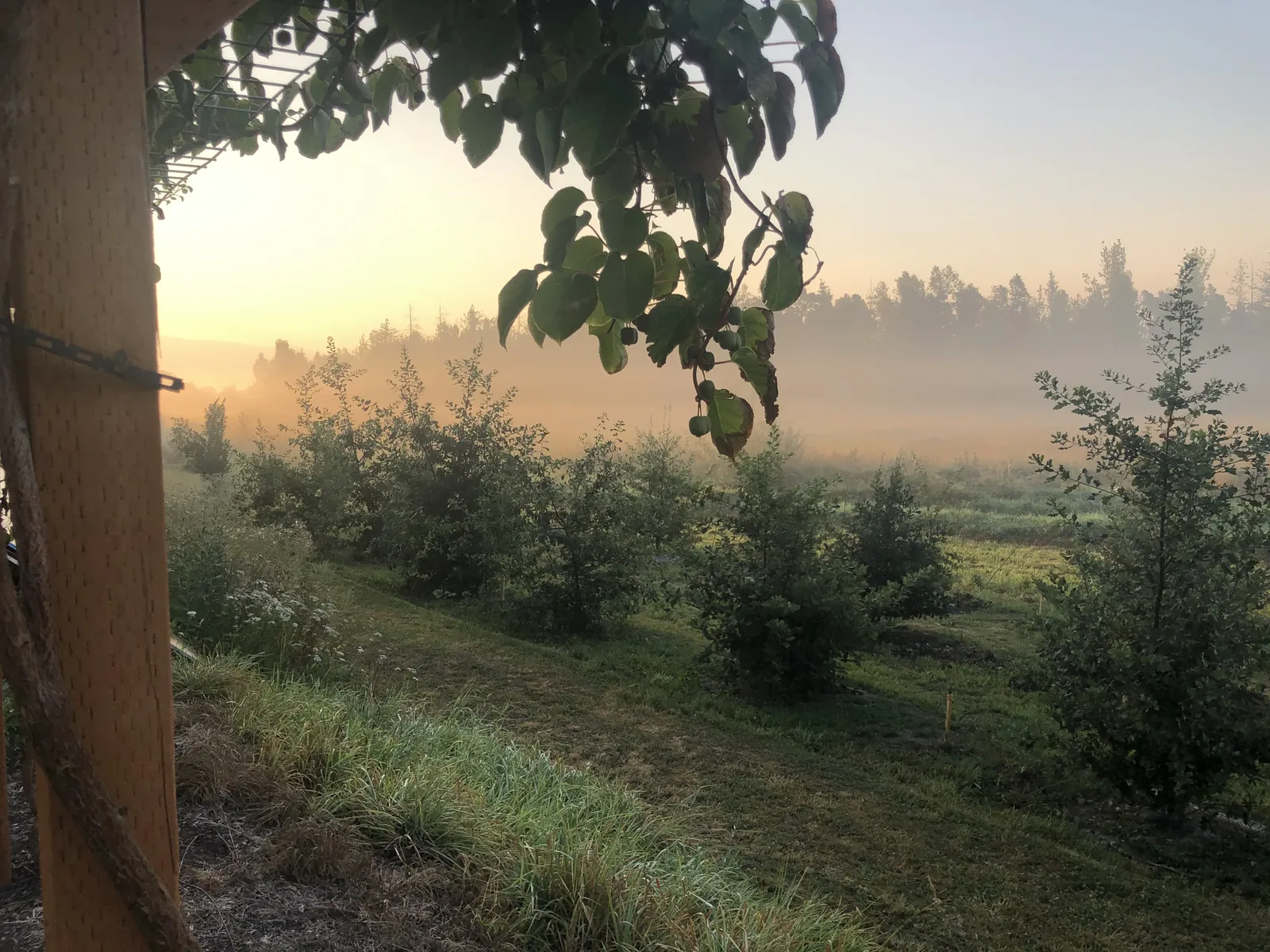
The Lagotto in the Pacific Northwest
A marsh-bred water dog, in a region of rain and water and the only wild truffles in North America. Of all the places this breed could land outside Italy, few fit it better.
The Region
Rare Country for This Breed
Most breeds, transplanted across an ocean, simply adapt to wherever they land. The Lagotto Romagnolo is one of the few for which a particular corner of North America turns out to be something closer to a homecoming. The breed was made in the marshlands of Comacchio and Ravenna, on the Adriatic side of northern Italy, a water retriever for a country of reeds, fog, cold lagoons, and, later, the oak and fir woodlands where it learned to hunt truffles. It is a dog shaped by water and forest in a temperate, rain-fed climate.
The Pacific Northwest is the closest thing to that country on this continent. Not approximately, specifically. The same mild, wet winters. The same abundance of water in every direction. The same temperate forests carpeting the hills. And, most strikingly, the same thing growing under those forests that gave the breed its modern purpose: truffles, native and wild, found nowhere else in North America in commercial quantity.
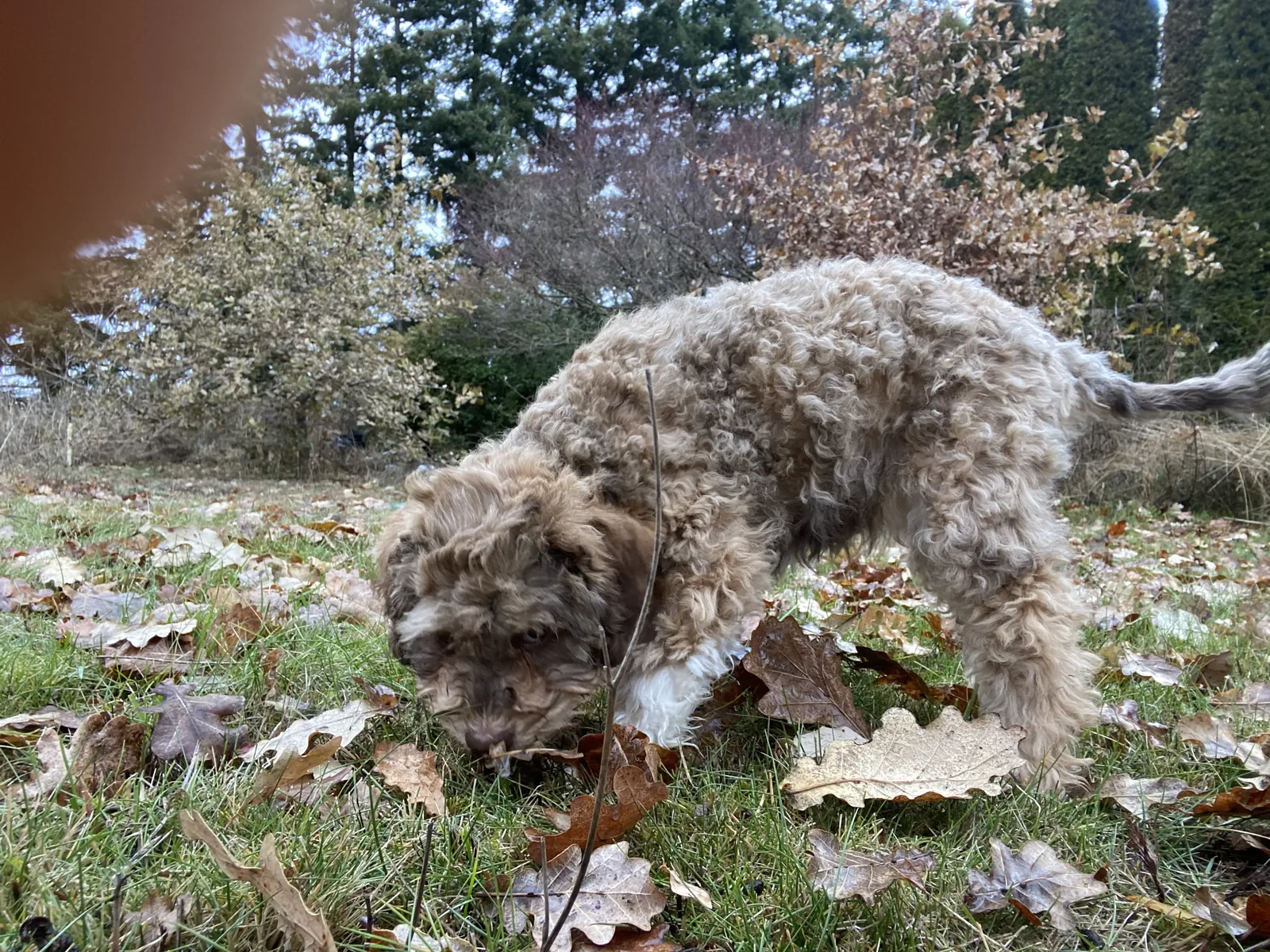
A Lagotto living in western Washington or Oregon is not a transplant making the best of an unfamiliar place. It is a marsh-and-forest dog living in marsh-and-forest country. That is the quiet thesis of this page, and of why we breed where we do. The rest of it is the detail.
Climate & Water
A Coat That Was Already Home Here
The Lagotto coat is a working garment built for a specific job in a specific climate: dense, woolly, tightly curled, waterproof enough to shed cold water through a long day of retrieving. It is weather equipment, and the weather it was built for is the weather the Pacific Northwest has in abundance.
Mild, wet winters that never get brutal. Cool, damp springs and autumns. Summers that, west of the Cascades, rarely climb high enough to distress a double-coated dog. And water everywhere a retriever could want it. A breed bred to work in and around water gets to be itself here, most months of the year, with no special accommodation, many of our families discover their Lagotto is happiest in exactly the weather they themselves were dreading.
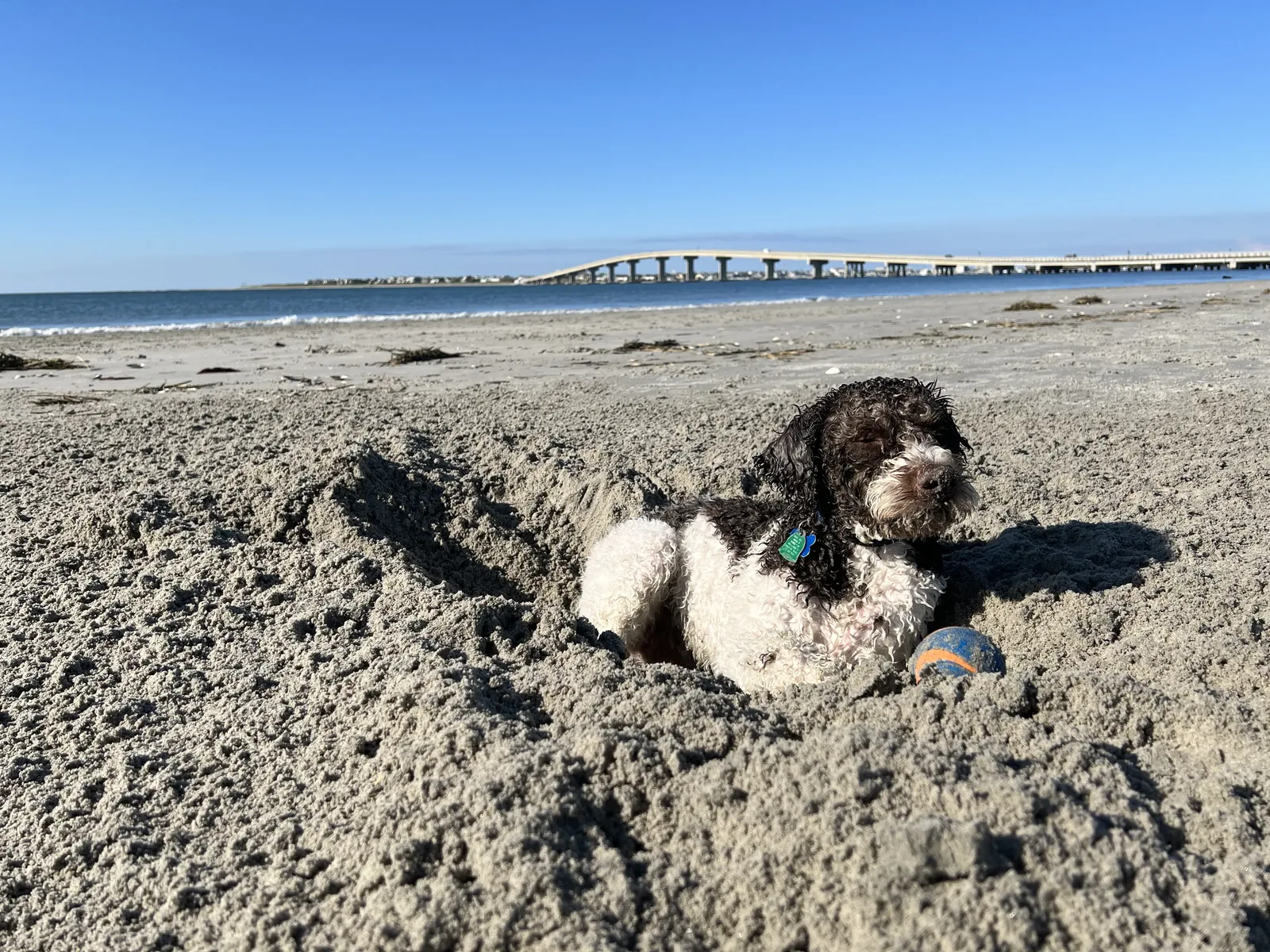
The honest cost, stated plainly: a woolly water dog in a wet-winter region is a mud specialist, and the coat that sheds rain holds clay with enthusiasm. Northwest families learn a towel-by-the-door habit fast, and the grooming rhythm matters more in the wet months than it would in a dry climate. We would rather name that here than have you learn it in November. It is a small tax on an otherwise near-perfect fit.
The Work
The Only Wild Truffles on the Continent
Here is the fact that still surprises people who have lived in the region their whole lives: the Pacific Northwest is one of the most truffle-rich landscapes on Earth. The US Forest Service has documented more than 350 truffle species in these forests, four of them culinarily significant. They grow wild, in symbiosis with Douglas fir, from northern California up through western Oregon and Washington and into southern British Columbia. Nowhere else in North America does this happen at scale.
For the Lagotto, the only breed on earth formally recognized as a truffle dog. That is not trivia. It is the breed’s entire modern reason for being, available here, in season, on native ground. A Lagotto worked in a Douglas fir stand in the Cascade foothills is doing precisely the job her ancestors did in the oak woods of Romagna. We wrote the full account in our essay on the Lagotto and the truffle, the longest and most-researched thing on this site.
Most of our families never hunt a truffle commercially, and they lose nothing by it. The point is larger than the harvest: this is a nose-first breed living in a region full of things worth finding, and the scent foundations we lay before eight weeks mean every puppy leaves us ready for whatever a family chooses to build on them, a backyard game, a nose-work title, or a January morning under the firs.
Placement
Families Across the Whole Northwest
We are in Lynden, in the top corner of Washington, but the families we place with are spread across the region. The upper Northwest is more connected than its map suggests, and a well-matched puppy is worth a drive or a short flight to the people who have waited for one.
Washington. From the Puget Sound cities, we are an easy day trip, about two hours north of Seattle, less from Everett or Bellingham. Our dedicated Washington page covers in-state drive times and pickup-day detail. Oregon. Portland is a longer haul, four to five hours by road, or a short hop by air, and Oregon families often fold pickup into a weekend; the irony that Oregon is the spiritual heart of North American truffle country is not lost on us. British Columbia. Canadian families have it easiest of all: the Aldergrove and Sumas crossings sit minutes from Lynden, and we help cross-border families sort the paperwork well ahead of pickup day. Idaho and beyond. The panhandle is a scenic drive, and we have placed further afield than that for families who decided the fit was worth the distance.
The logistics are simple and fixed: we never ship a puppy as cargo. Every out-of-area placement is built around an in-person pickup, a flight home with the puppy in-cabin, or a drive made into a long weekend. The Puppies & Process page lays out how placement works wherever in the region you are starting from.
Who We Are
Home of the Northwest Lagotto
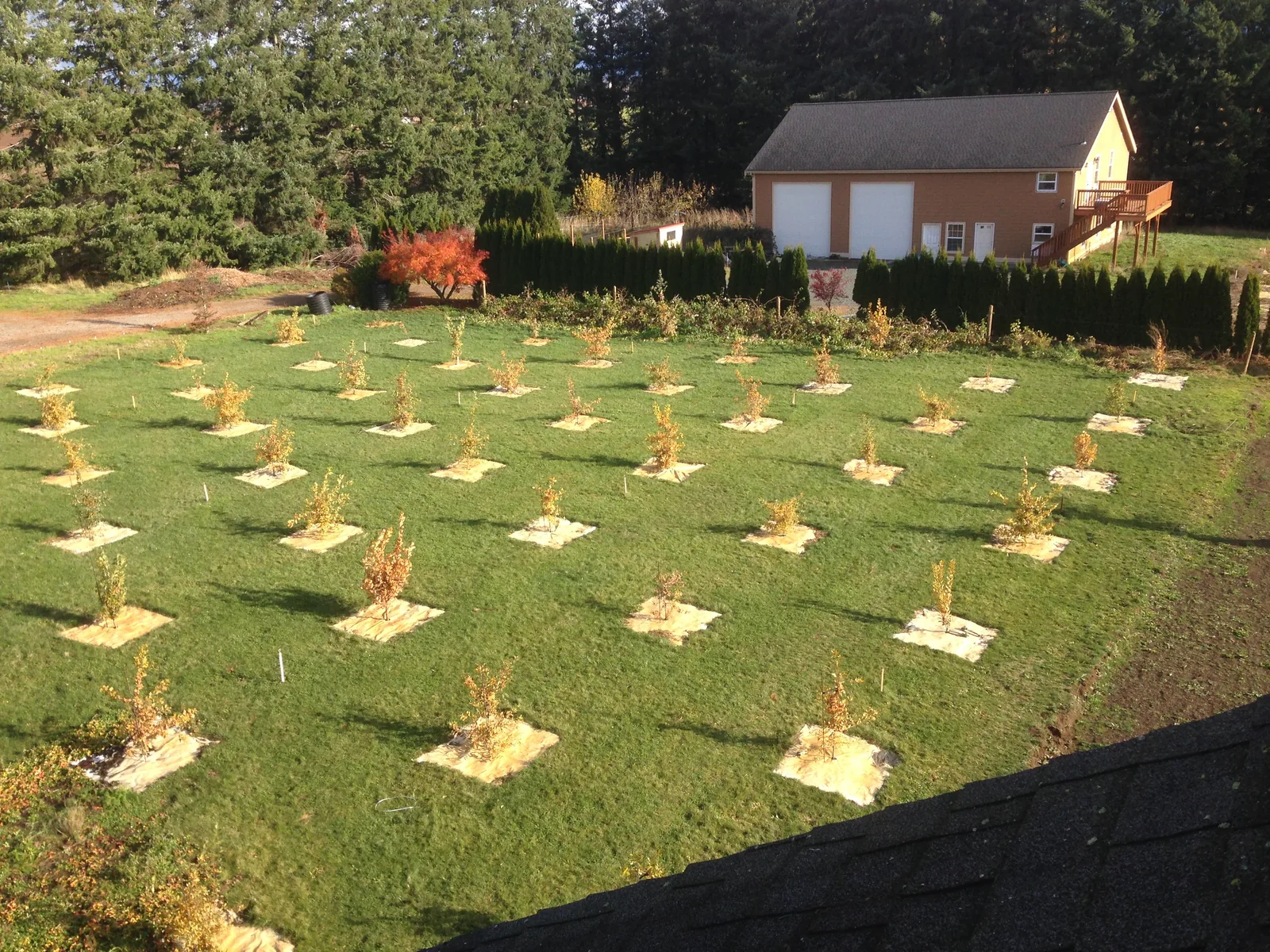
The name is not a slogan. Northwest Lagotto has bred this breed in this region for over a decade, on ten acres at the top of Washington, with bloodlines drawn from the breed’s Italian heartland, the kennels of Romagna where the modern Lagotto was rescued from near-extinction, and raised in a working household rather than a kennel building. Our foundation traces to Il Granaio dei Malatesta, one of Italy’s defining programs; our dogs carry titles earned on both sides of the Atlantic; our current autumn litter is sired by the dog that was Best of Breed at Westminster and the number one Lagotto in the United States.
We say that not to claim the region as a territory. There are other good Northwest breeders, and the right way to choose among us is the same set of questions applied to all of us, but to be plain about what we are: a Pacific Northwest program built to a European standard, in the one part of North America where this particular breed is most at home. The region and the breed suit each other. Our work is to do justice to both.
The Standard
How to Evaluate Any Northwest Breeder, Including Us
If you are searching the region for a Lagotto, the test for every program you find is the same, and it is worth carrying into every conversation. Both parents health-tested, with results you can verify yourself in the public OFA database rather than take on trust. A structured raising protocol with a name and a method, not a vague assurance of good socialization. A breeder who interviews you as carefully as you interview them. A contract with a lifetime return clause. Support that does not end at pickup.
We hold ourselves to that list and publish the evidence, every test, every registry number, on our health testing page. Use our full guide to choosing a Lagotto breeder on us first, and then on anyone else. A region with several good breeders is a good thing for buyers; it means you can afford to choose well.
Now
What’s Happening at Northwest Lagotto
An autumn 2026 litter is open for inquiries, Blanca, our Swedish-line dam, bred to NBISS GCHS Il Granaio dei Malatesta Flocky, Best of Breed at Westminster in 2023 and the number one Lagotto Romagnolo in the United States that year. The full account of the pairing is in the announcement, and our current & planned litters page keeps the latest in one place.
Be notified about the autumn 2026 litter
Leave your email and we will let you know when placement decisions open. To reserve a place, a $500 deposit and a conversation put you on the waitlist.
If you are beginning the conversation from anywhere in the Northwest, the waitlist page explains how placement works, and writing to us directly is always the right first step. We read everything ourselves.
Questions
Questions Families Ask
Where is Northwest Lagotto in the Pacific Northwest?
We are in Lynden, Washington, the far northwest corner of the state, fifteen minutes from Bellingham and minutes from the Canadian border. It places us within reach of the whole upper Northwest: about two hours from Seattle, a manageable drive or short flight from Portland, the Okanagan, Vancouver, and the Idaho panhandle.
Do you place Lagotto puppies across the Pacific Northwest?
Yes. Families have come to us from across Washington, Oregon, Idaho, and British Columbia. We do not ship puppies as cargo; out-of-area placements are planned around an in-person pickup, a drive built into a weekend, or a short flight into Bellingham or Sea-Tac with the puppy traveling home in-cabin. We help plan the logistics, including cross-border paperwork for Canadian families.
Why is the Pacific Northwest well suited to the Lagotto Romagnolo?
The Lagotto was bred as a water retriever in the marshlands of Italy’s Romagna region, and the Pacific Northwest is one of the closest climatic matches to that homeland anywhere in North America: mild wet winters, abundant water, and summers that rarely punish a double-coated dog. The region is also the only place on the continent with native culinary truffles growing wild, which means the breed’s defining work is genuinely available here.
Are there Lagotto truffles in the Pacific Northwest?
Yes, remarkably. The Pacific Northwest has four native culinary truffle species growing wild in Douglas fir forests from northern California to southern British Columbia. It is the only region in North America where the Lagotto’s traditional truffle-hunting work can be done on native, wild-growing species, in season, without importing anything.
Is Northwest Lagotto near Seattle or Portland?
We are about two hours north of Seattle on I-5, an easy day trip for Puget Sound families. Portland is a longer drive, roughly four to five hours, or a short flight; many Oregon families combine pickup with a weekend in the area. Bellingham International Airport, twenty-five minutes from us, and Sea-Tac both serve out-of-town families well.