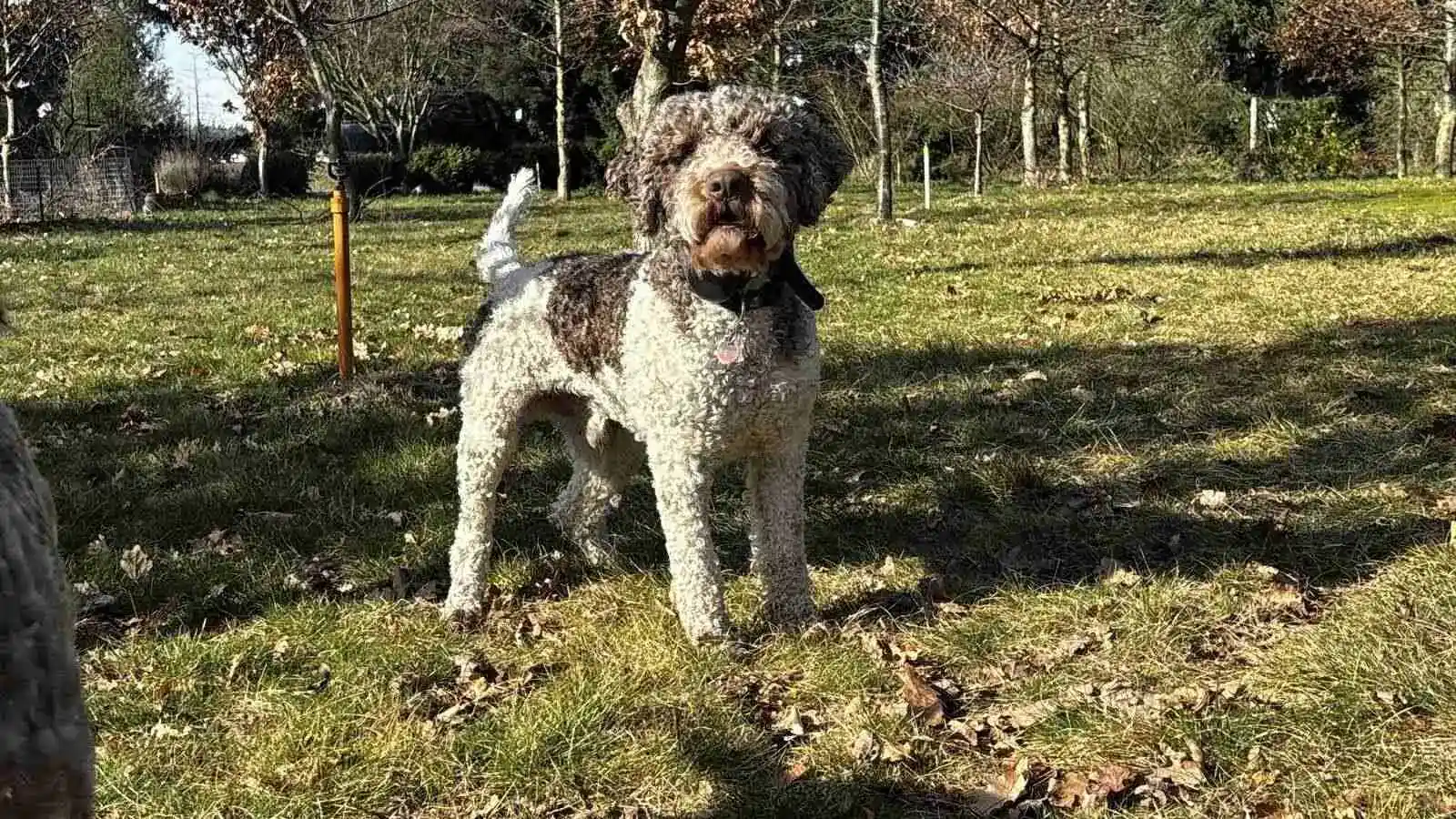
Lagotto Romagnolo, Raised in Washington
Ten acres in Lynden, Whatcom County, where this breed’s climate, its water, and its truffle country all happen to meet.
The Place
The Far Corner of Washington
Lynden sits in the Nooksack Valley, in the top-left corner of the state, five minutes from the Canadian border, fifteen from Bellingham, with Mount Baker filling the eastern sky on a clear day. It is a Dutch farming town of raspberry fields and dairy land, the kind of place where the roads are straight, the pace is unhurried, and ten acres is an ordinary thing for a family to have.
Those ten acres are where our dogs live. Not in a kennel building at the edge of the property, in the house, underfoot, raised inside the rhythm of a working household and let out into real space every day. A puppy whelped here spends its first eight weeks hearing dishwashers and doorbells and tractors at a distance, walking on grass, gravel, and barn floor, meeting weather as a fact of life rather than an event. That is not a marketing line; it is the raising environment, and it is the reason we settled in this particular corner of the state. A breeding program needs two things a city cannot give it at once: room, and quiet. Lynden has both to spare.
Breed & Region
The Climate This Coat Was Built For
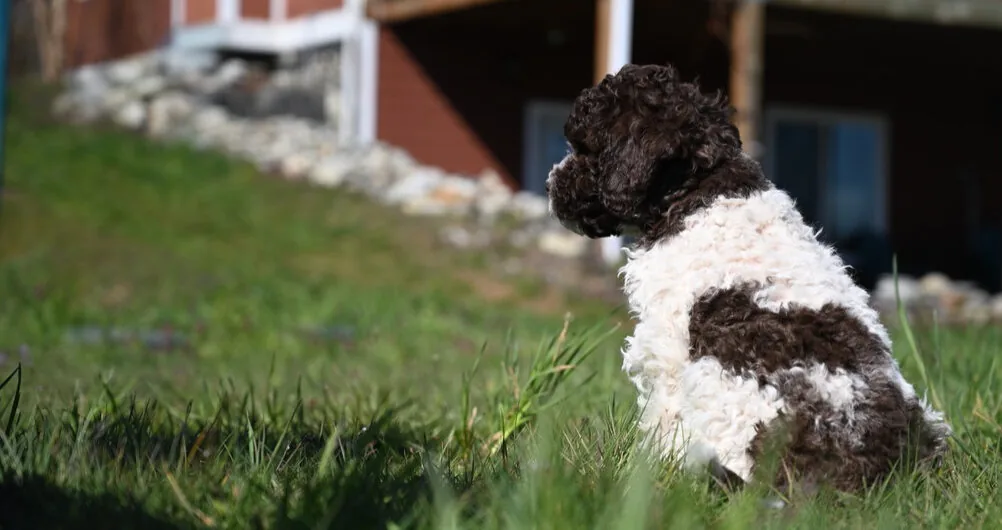
The Lagotto was made in the marshlands of Comacchio and Ravenna, a water retriever for a country of reeds, rain, and cold lagoons. The coat that defines the breed is a working garment: dense, woolly, curled tight enough to shed water and hold warmth through a day of swimming in February.
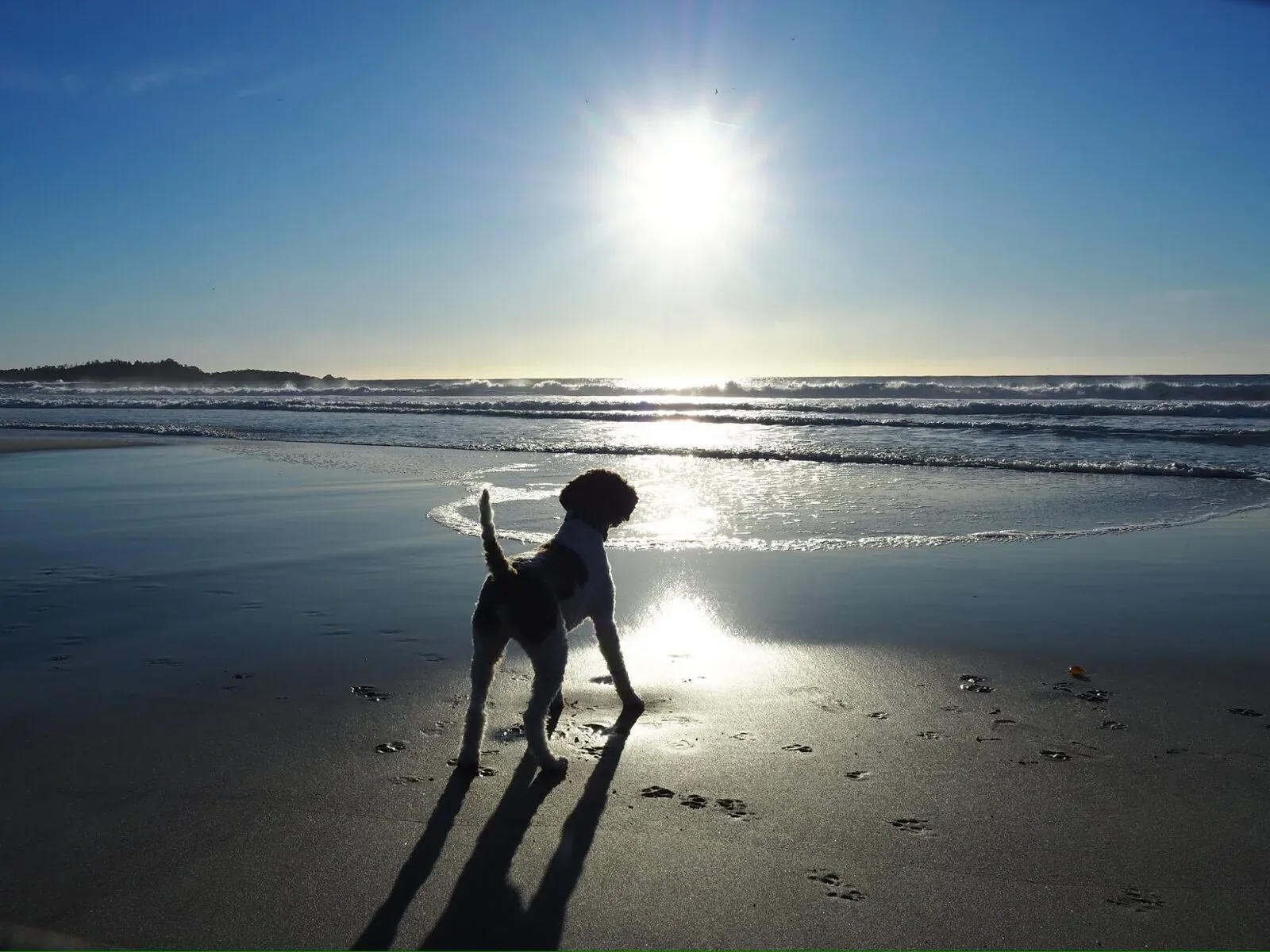
Western Washington, as it turns out, is a fair imitation of that original country. Mild, wet winters. Summers that rarely punish a double-coated dog. Water in every direction, the Nooksack River through the valley, lakes in the foothills, the Salish Sea half an hour west. A retrieving breed living here gets to be what it was bred to be, most months of the year, without anyone managing the thermostat around it.
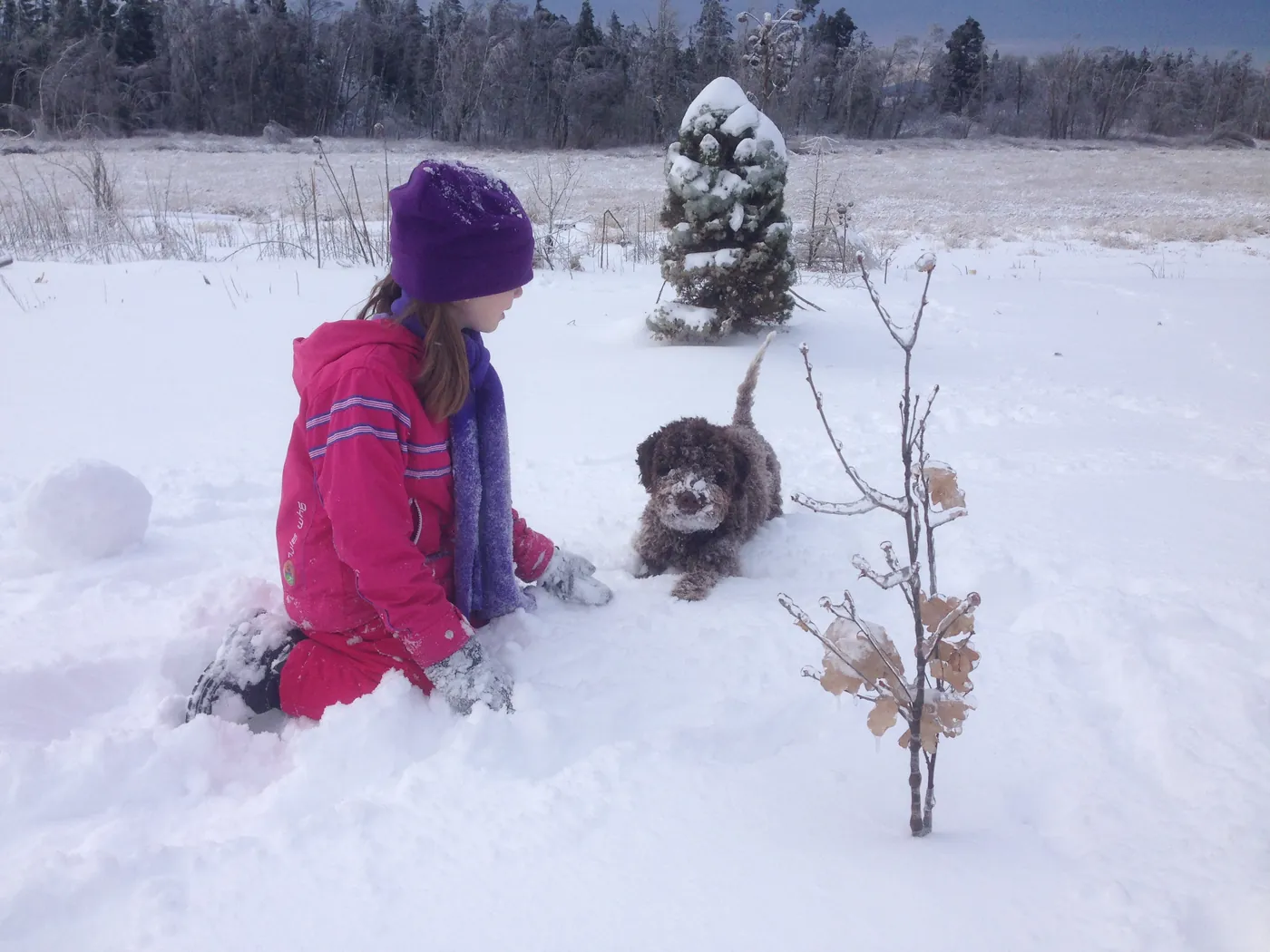
We will be honest about the trade. A Lagotto in a Pacific Northwest winter is a mud-collection system of rare efficiency, and the coat that sheds water does not shed clay. Families here learn a towel-by-the-door routine early, and the grooming rhythm matters more in the wet months than anywhere else. We would rather you know that on this page than discover it in November.
The Work
Native Truffles, Native Work
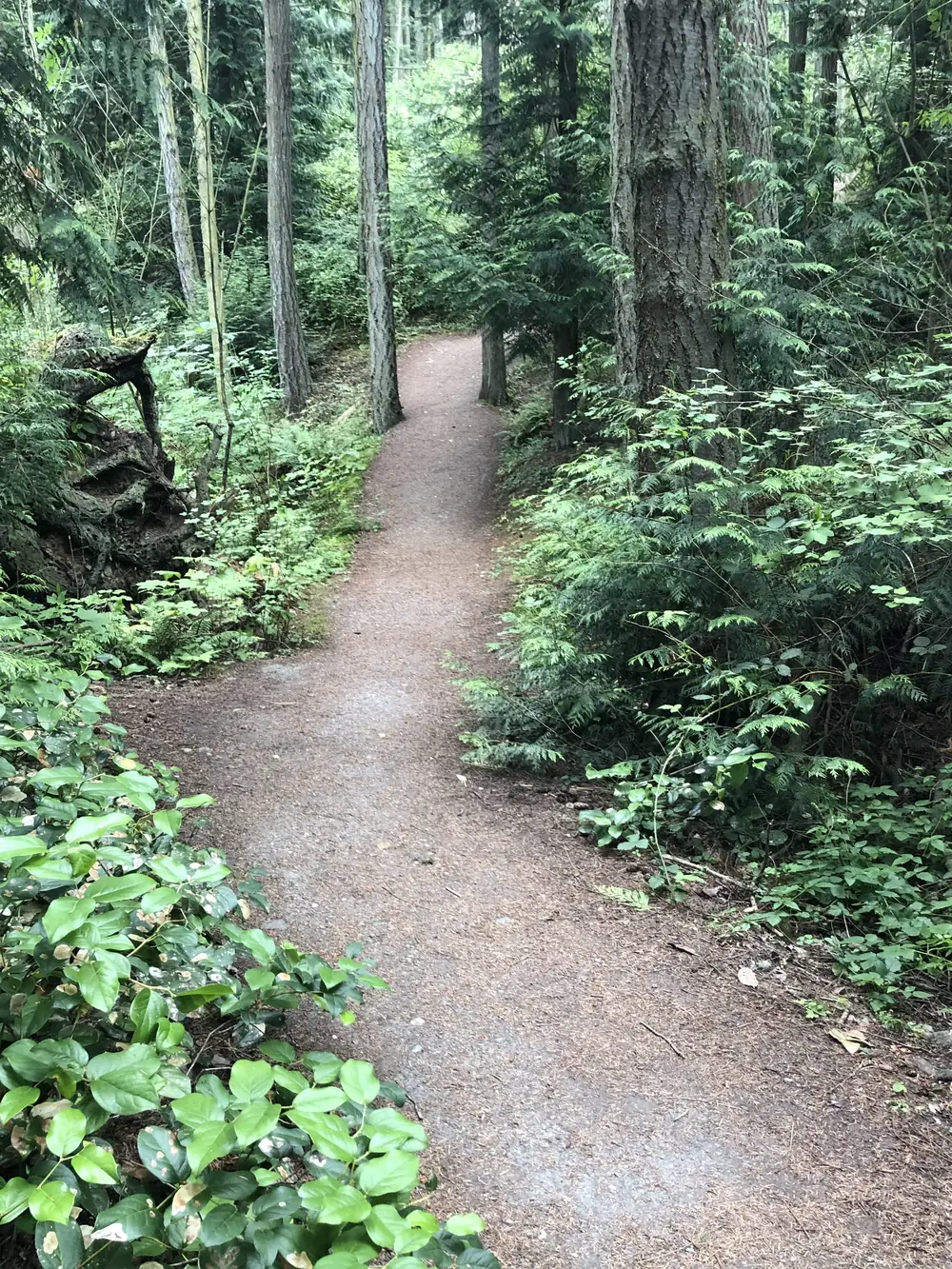
Here is the quiet, singular fact about this region: the Pacific Northwest is one of the few places on earth outside Europe where commercially valued truffles grow wild. Four native species fruit in our own forests, in the root systems of the Douglas fir country that starts a short drive from our front door. We wrote about them, and about the dog that finds them, at length in our essay on the Lagotto and the truffle.
What that means for a Lagotto living in Washington is simple and rather wonderful. The breed’s defining work, the reason it survived when the marshes were drained, the only work for which any breed on earth is formally recognized, is available here, in season, for real. Not as a novelty imported in a scent kit, though scent kits are a fine way to start, but in the ground, under the firs, an hour from Seattle.
Most of our families never hunt a truffle commercially, and none of them need to. The point runs deeper than the harvest: this is a nose-first breed, and a region full of things worth finding. The scent foundations we begin before eight weeks give every puppy the start; what a family builds on it, backyard games, formal nose work, or a January morning in the forest, is theirs to choose.
Practicalities
Getting Here, From Anywhere in the State
Lynden is reachable in a way that surprises people who think of it as remote. From Bellingham, we are fifteen minutes east. From Seattle, about two hours straight up I-5, close enough that most Puget Sound families make pickup day a single, unhurried day trip. Tacoma and Olympia add forty minutes to an hour to that. Spokane families face the long drive across the mountains, around five and a half hours, and several have told us the puppy slept the whole way home.
Getting to Lynden
Drive times to the property, by origin
Flying in is genuinely easy. Bellingham International Airport is twenty-five minutes from the property, with direct service from several western cities; Sea-Tac is the two-hour option with every connection in the world. Canadian families have it easiest of all. The Aldergrove and Sumas crossings are minutes from Lynden, and we help cross-border families plan the paperwork well before pickup day.
Pickup day itself is deliberately slow. You meet the adults, sit with the litter, go through the go-home folder page by page, and leave with a puppy who has had a calm morning rather than a frantic one. The drive home and the first night have their own preparation, we wrote a full guide to the first ride and the first night, and every family gets walked through it in person.
On visits before that day: yes, with arrangement. We do not host casual drop-ins, because the calm of this household is part of how the puppies are raised, but once a real conversation is underway, serious families are welcome to come meet the dogs, walk the property, and see how everything here actually works before committing to anything.
Placement
When the Right Breeder Isn’t the Closest One
A meaningful share of our placements leave Washington. Families have come to us from Oregon and Idaho, from California, from across the Canadian border, and occasionally from much farther, not because there were no breeders nearer to them, but because the fit was here. We think that is the right order of operations. Distance is a logistics problem, and logistics problems have solutions. Fit is the decision.
The logistics, for the record: we do not ship puppies as cargo, ever. Out-of-area placements are planned around an in-person pickup, a flight into Bellingham or Sea-Tac with the puppy traveling home in-cabin, or a drive built into a long weekend. We have helped enough families through it that the path is well worn, and the Puppies & Process page walks through how placement works wherever you are starting from.
The Standard
How to Evaluate Any Breeder, Including Us
There are several Lagotto programs in the Northwest, and more across the country, and the plain truth is that the test for all of them is the same. Both parents health-tested, with results you can verify yourself in the public OFA database rather than take on faith. A structured raising protocol with a name and a method, not a vague assurance that puppies are “well socialized.” A breeder who interviews you at least as carefully as you interview them. A contract with a return clause that lasts the dog’s lifetime. Support that does not end when the cheque clears.
We hold ourselves to that list and we publish the evidence, every test, every registry number, on our health testing page. If you are early in the search, our guide to choosing a Lagotto breeder gives you the full set of questions to carry into any conversation, with anyone. Use it on us first.
Now
What’s Happening at Northwest Lagotto
An autumn 2026 litter is open for inquiries, Blanca, our Swedish-line dam, bred to NBISS GCHS Il Granaio dei Malatesta Flocky, Best of Breed at Westminster in 2023 and the number one Lagotto Romagnolo in the United States that year. The full account of the pairing, the pedigree, and the health work is in the announcement.
Be notified about the autumn 2026 litter
Leave your email and we will let you know when placement decisions open. To reserve a place, a $500 deposit and a conversation put you on the waitlist.
If you are beginning the conversation, the waitlist page explains how placement works, and writing to us directly is always the right first step. We read everything ourselves.
Questions
Questions Families Ask
Where in Washington is Northwest Lagotto located?
We are in Lynden, in Whatcom County, the far northwest corner of Washington, about fifteen minutes from Bellingham and five minutes from the Canadian border. The dogs are raised on ten acres of farmland.
How far is Lynden from Seattle?
About two hours north on I-5. Most Seattle-area families make pickup day a single comfortable day trip. Bellingham International Airport is roughly twenty-five minutes from us for families flying in.
Can we visit before deciding?
Yes, once a conversation is underway. We don’t host casual drop-ins, because the calm of the household is part of how the puppies are raised, but serious families are welcome to meet the adults and see how the dogs live before any commitment is made.
Do you place puppies outside Washington?
Regularly. Families have come to us from Oregon, Idaho, California, and beyond, and Canadian families cross at Lynden’s own border crossing. Our Pacific Northwest page looks at why this region in particular suits the breed. We do not ship puppies cargo; out-of-area placements are planned around an in-person pickup, and we help with the logistics.
Are there puppies available now?
Availability changes by season. An autumn 2026 litter, Blanca bred to NBISS GCHS Il Granaio dei Malatesta Flocky, is currently open for inquiries. The announcement page carries the full details, and our waitlist page explains how placement works.